
Industrial Leaf Chain Technology for Forklift Mast Systems and Lifting Equipment
7/3/202610 min read
What is Leaf Chain?
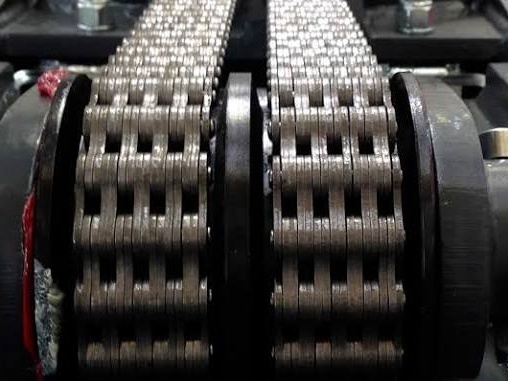
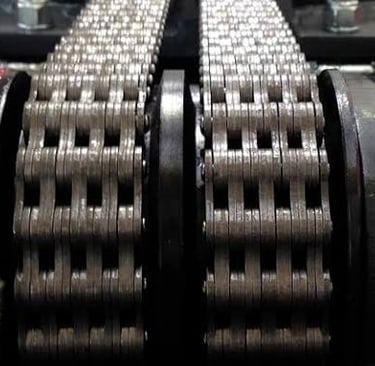
Leaf chain technology is a crucial component in many lifting applications, especially in forklift mast systems. Unlike traditional roller chains, leaf chains consist of a series of interconnected flat plates, which gives them unique operational characteristics that are particularly advantageous in heavy-duty environments. These chains are designed to handle high loads efficiently and are often utilized in equipment requiring vertical lifting capabilities.
The primary structure of a leaf chain includes several key components: link plates, pins, and bushings. The link plates are the flat elements that form the primary body of the chain. Each leaf chain is constructed from multiple link plates that are oriented parallel to each other, allowing for greater flexibility and load distribution. The strength of the chain is attributed to the material and manufacturing processes used to produce these plates, which are typically made from high-strength steel to withstand the demands of industrial applications.
Connecting these link plates are the pins, which act as pivot points, allowing the plates to rotate and facilitate movement. The pins are inserted through the holes in the link plates, creating a strong joint that is capable of withstanding significant tension. In addition to pins, most leaf chains incorporate bushings within their design. Bushings serve to reduce friction between the moving parts, enhancing operational efficiency and extending the lifespan of the chain.
Understanding the anatomy of leaf chains is essential for engineers and designers who work with lifting equipment. Knowledge of the structural components helps in selecting the appropriate leaf chain for specific applications and ensures optimal performance in various industrial settings. Furthermore, recognizing the benefits of leaf chain technology, such as its capacity for high load handling and reduced maintenance needs, is vital for improving the effectiveness of material handling processes.
Leaf Chain Standards
Leaf chains are crucial components in various lifting and material handling applications, particularly in forklift mast systems. Their reliability and efficiency are heavily influenced by the adherence to established standards in their manufacturing and specification. Key standards governing leaf chains include ISO 4347, ANSI/ASME B29.8, and DIN 8150. Each of these standards specifies different criteria that ensure safety, performance, and compatibility with lifting equipment.
ISO 4347 details the specifications for leaf chains, which are pivotal for maintaining uniformity in design and performance across various manufacturers. This standard establishes the dimensions, tolerances, and materials required, enabling manufacturers to produce chains that can withstand rigorous industrial applications. Compliance with ISO 4347 is essential not only for ensuring the longevity of the chains but also for user safety during operation.
Similarly, ANSI/ASME B29.8 addresses the design and manufacturing standards specific to leaf chains, focusing on the operational capabilities required for efficient lifting processes. This standard emphasizes the importance of strength and load capacity, essential characteristics that influence the overall functionality of leaf chains in lifting equipment. With stringent adherence to ANSI/ASME B29.8, manufacturers can offer chains with predictable performance that meet various load requirements.
Another significant standard is DIN 8150, which also provides a framework for the design and testing of leaf chains. This standard supports the industrial compatibility of chains with different lifting mechanisms, ensuring that operational reliability is maintained across diverse applications. In addition to these standards, the BL series designation serves as an indication of specific characteristics relating to the chain’s strength and design features, helping users select the appropriate products for their needs.
Key Specifications of Industrial Leaf Chains
Understanding the key specifications of industrial leaf chains is crucial for engineers and professionals involved in the design and maintenance of forklift mast systems and other lifting equipment. These specifications define the performance and reliability of leaf chains in various applications, enabling precise selection to meet specific operational requirements.
One of the primary specifications is the pitch of the chain, which refers to the distance between the centers of adjacent pins. The pitch significantly affects the chain's compatibility with sprockets and thus its overall functionality. Generally, the most common pitch sizes used in industrial applications range from 6.35 mm to 50 mm.
Another critical specification is the pin diameter, as it influences the strength and durability of the chain. A larger pin diameter typically indicates a stronger chain that can withstand heavier loads and longer operational cycles. Common pin diameters for leaf chains usually span from 6 mm to 12 mm, depending on the application and specific requirements of the lifting equipment.
The minimum tensile strength serves as a standard measure of the load-bearing capability of the leaf chain. This measurement ensures that the chain can endure specified loads without risk of failure. Leaf chains are often rated for tensile strengths ranging from 10 kN to over 200 kN, depending on their design and intended use.
Weight per meter is another important factor, as it relates to the ease of installation and overall performance. Lighter chains may be beneficial in applications where reduced mass is critical, while heavier chains can offer enhanced durability. Typically, weights can vary noticeably based on material and design, generally falling between 0.5 kg/m and 6 kg/m.
Lastly, the number of plate links per assembly is a crucial specification when assessing the chain's assembly structure. Commonly, industrial leaf chains feature from 4 to 40 plate links, aligning with the specified pitch and pin diameter for optimal functionality.
Materials & Heat Treatment for Leaf Chains
In the manufacturing of industrial leaf chains, particularly for forklift mast systems and lifting equipment, the selection of materials plays a pivotal role. The most commonly utilized materials include 40Mn and 45Mn alloy steel plates. These materials are favored for their excellent mechanical properties, which provide the necessary strength and durability required in demanding applications. The alloy composition ensures that the leaf chains can withstand heavy loads while maintaining structural integrity.
Another critical component of leaf chains is the incorporation of carburized pins. Carburizing is a heat treatment process that enhances the surface hardness of steel components, allowing them to resist wear and deformation. The pins undergo this process to improve their mechanical properties without sacrificing toughness. Carburized pins exhibit superior performance in high-load environments, making them an essential element in leaf chain assembly.
Additionally, the induction hardening process is extensively used to achieve the desired surface hardness in leaf chain components. This process involves heating the material using electromagnetic induction followed by rapid cooling. Induction hardening is particularly beneficial as it allows the surface to attain high hardness levels while preserving a tough core. This characteristic is vital for the longevity and performance of leaf chains, especially in applications with cyclical loading and exposure to external stressors.
Achieving the targeted surface hardness is not merely a technical requirement; it is a crucial factor in determining the operational efficiency and lifespan of leaf chains. In high-demand environments, where uninterrupted performance is essential, the right combination of material properties and heat treatment processes is imperative. Understanding these aspects enables manufacturers and users alike to make informed decisions when selecting leaf chains for their specific lifting applications.
Applications of Leaf Chains in Lifting Equipment
Leaf chains have become an essential component in various industrial lifting applications, providing reliable and efficient performance in environments that demand durability and strength. One prominent application is in forklift mast carriage lift chains, where leaf chains facilitate the vertical movement of loads within the mast system. Their design allows for flexibility and minimal friction, which enhances the operational efficiency of forklifts.
Additionally, leaf chains are utilized in hoist and crane lifting chains, where their ruggedness ensures safe lifting operations of heavy payloads. These chains are capable of handling varying weights and can be configured to suit different lifting heights. Their high tensile strength significantly reduces the risk of chain failure, thereby enhancing workplace safety.
The effectiveness of leaf chains can also be seen in counterweight balance chains, which are crucial in maintaining equilibrium in various lifting scenarios. By employing leaf chains in this application, machinery can achieve a fine balance, leading to smoother operation and increased control during lifting tasks.
Moreover, leaf chains are integral to mold handling overhead cranes, where they endure demanding conditions in injection molding processes. The robustness of leaf chains ensures they can withstand the fatigue of repetitive cycles while maintaining optimal performance under heavy loads.
Lastly, leaf chains find applications in stage lift platform chains, commonly used in theater settings. These chains support the lifting and lowering of staging equipment, showcasing their versatility across different domains. Their smooth operation and reliability contribute to seamless performances, ensuring that technical demands are met without compromising safety.
Failure Analysis
Leaf chains play a crucial role in the performance of forklift mast systems and other lifting equipment, yet they are susceptible to various failure modes. Understanding these potential failures is essential for ensuring reliability and safety in industrial applications. One common issue is plate fatigue cracking, which occurs due to repeated loading and unloading cycles. This wear leads to the development of micro-cracks on the surface of the plates, ultimately compromising the integrity of the chain. Regular inspection of the leaf chain can help identify signs of fatigue before they result in catastrophic failure.
Another critical failure mode is pin elongation, which occurs when the pins within the chain become worn beyond acceptable limits. Over time, the repetitive motion and stress can cause these pins to lose their shape, resulting in poor chain performance and misalignment with the sprocket system. It is advisable to monitor the dimensions of the pins regularly and replace them as they show signs of elongation to maintain optimal functionality.
Corrosion is yet another factor that can significantly affect the lifespan of leaf chains, particularly in outdoor applications where exposure to the elements is inevitable. Environmental factors such as moisture, salt, and chemicals can contribute to rust formation, weakening the structural integrity of the chain. To mitigate corrosion, it is crucial to employ appropriate protective coatings and lubricants that can enhance the durability of the chain.
Improper alignment of the leaf chain can also lead to premature damage. Misalignment can cause uneven wear, putting excessive stress on specific components of the chain and leading to premature failure. It is important to ensure that the forklift mast and associated equipment are properly aligned during installation and routine maintenance checks.
Selection & Safety
Selecting the appropriate leaf chain for forklift mast systems and lifting equipment is crucial for ensuring operational efficiency and maintaining safety standards. Leaf chains exhibit distinct characteristics and load capacities, and choosing one suited for specific applications is paramount for smooth operations. The first step in this selection process involves evaluating the rated load capacity of the leaf chain. This capacity represents the maximum load that the chain can safely handle under normal operating conditions, and it should align with the load requirements of the particular application.
It is essential to assess the minimum safety factor requirements as outlined by the ASME B30 standards. These standards provide key benchmarks that ensure equipment reliability and personnel safety. The safety factor is the ratio of the load limit to the maximum load anticipated during operation. A higher safety factor is generally advisable, providing a cushion against unexpected loads or conditions that may not be initially accounted for. A common practice is to choose a safety factor of at least 5 to 1 for lifting applications, thereby minimizing risk and enhancing safety.
In addition to understanding rated load capacities and safety factors, another critical aspect is the coupling method used to attach the leaf chain. The two primarily utilized methods are dead-end couplings and anchor couplings. Dead-end couplings are typically simpler and more streamlined, ensuring that the leaf chain remains secure during operation. Conversely, anchor couplings offer a more robust attachment, beneficial in scenarios where enhanced load stability is required. Each method has its advantages and disadvantages, and the choice between them should be informed by the specific operational demands and safety considerations unique to the working environment. Thus, understanding the selection criteria, safety measures, and coupling methods ensures that leaf chains are used effectively and responsibly in various industrial applications.
Maintenance of Leaf Chains
Ensuring the longevity and efficiency of leaf chains in forklift mast systems and lifting equipment is paramount, and this can be achieved through regular maintenance practices. One essential aspect of maintenance is the measurement of chain elongation. It is advisable to routinely check the elongation of leaf chains, typically every three to six months, depending on usage. Elongation can indicate wear and, if not addressed, may lead to premature chain failure. The appropriate method involves measuring the chain over a specific number of links and comparing it to the manufacturer's specifications to ascertain whether the chain needs replacement.
Lubrication plays a critical role in maintaining leaf chains. Experts recommend establishing a lubrication schedule that adheres to the guidelines set forth by the chain manufacturer. Generally, it's beneficial to apply lubrication every 100 operating hours or as advised, particularly in high-load or dusty environments. Utilizing the correct lubricant will minimize wear, prevent rust, and ensure smooth operation, thus enhancing the chain's life.
Furthermore, conducting periodic inspections following OSHA/ISO standards is crucial for safety and effectiveness. A thorough inspection checklist should include: checking for visible damages such as cracks or dents in the links, ensuring the alignment of the chain path, examining the sprockets for wear, and ensuring all operational components are functioning correctly without unusual noise or vibrations. Any irregularities should be addressed immediately to prevent operational failures.
In conclusion, effectively maintaining leaf chains is essential for the operational efficiency of forklift mast systems and other lifting equipment. By following prescribed elongation protocols, adhering to recommended lubrication intervals, and performing regular inspections, operators can significantly enhance performance and safeguard against unexpected breakdowns.
Why Partner with an Experienced Manufacturer
When considering the optimal solutions for forklift mast systems and lifting equipment, the advantages of partnering with an experienced manufacturer, specifically one that specializes in leaf chains, become increasingly clear. A manufacturer with over 20 years of specialization in leaf chains not only brings a wealth of knowledge but also an acute understanding of the intricacies involved in producing reliable and high-quality components tailored to the specific needs of industrial applications.
One of the primary benefits of engaging such a manufacturer is access to in-house tensile testing facilities. These facilities enable the rigorous evaluation of leaf chains to failure, ensuring that the components meet safety and performance standards before being deployed in operational circumstances. Reliable testing protocols are paramount in assuring that the chains possess the requisite strength and durability necessary for demanding environments. Thus, knowing that the chains you procure have undergone stringent testing significantly enhances the reliability of your lifting operations.
Moreover, an experienced manufacturer is equipped with an in-depth understanding of export requirements for international operations. If your company plans to expand its reach globally, navigating the complexities of international regulations can be daunting. A specialized manufacturer adept in these areas streamlines the process, ensuring compliance with all pertinent regulations, which can save time and reduce risks associated with international logistics.
In addition to these technical advantages, a partnership with a seasoned manufacturer also offers superior customer service. Such companies are often committed to fostering long-term relationships, which means that you can expect not only responsive communication but also ongoing support for troubleshooting and product inquiries. This level of service is invaluable as it allows businesses to maintain smooth operations and minimize downtime.
Quality
Expert chain manufacturing with 20 years experience.
GET IN TOUCH
Tel:+86-571 88065675 | +86-571 88842852
E-mail:oceanindustry@vip.163.com
Fax:+86-571 88844378
Address:4th Floor, Block 2, Qianjiang Century Industrial Park, 2327 Hongning Road,Ningwei Town,Hangzhou, China
© 2005. All rights reserved.
An OIC Group company