
The Comprehensive Industrial Chain Manufacturing Process: From Raw Material to Finished Product
6/11/20267 min read
Material Procurement and Mill Test Certification
The initial phase of the industrial chain manufacturing process is critical to ensuring that the final product adheres to stringent performance standards. Material procurement involves sourcing raw materials which are foundational to the quality and durability of the chain. Different types of raw materials can be utilized, such as carbon steel, alloy steel, and stainless steel. The selection of these materials significantly influences the operational characteristics of the chains, particularly their tensile strength and resistance to wear.
Equally important in this phase is the implementation of mill test certifications (MTC). MTCs provide verification that the materials used in manufacturing meet specified standards and certifications. This documentation is vital for maintaining quality control throughout the manufacturing process and assures manufacturers and consumers of the material’s specifications. The results of various tests conducted on the raw materials, including chemistry analysis and mechanical properties, are typically detailed in the MTC, which serves as a compliance guarantee.
Testing protocols must be adhered to rigorously to ensure that the raw materials not only meet physical criteria but also maintain consistency in quality. Each batch of materials can vary, making it imperative that thorough testing accommodates these variations to mitigate any potential failure in the final product. The impact of material specification is pronounced; substandard materials can lead to chain failures, whereas high-quality materials enhance reliability and durability.
Thus, the foundational step of material procurement, combined with thorough mill test certification, establishes a robust framework for the subsequent phases of the chain manufacturing process, ensuring that all products meet the critical performance criteria necessary for industrial applications.
Blanking and Punching Chain Plates
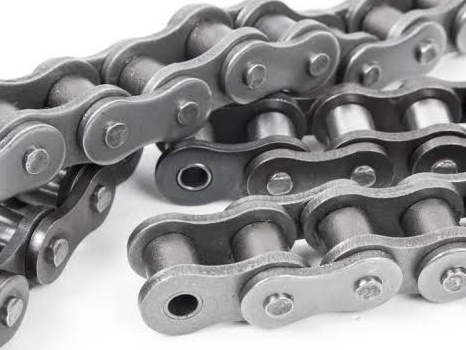
The manufacturing of chain plates is a critical step in the production of industrial chains, serving as the primary building blocks for strength and durability. The process begins with blanking, where sheets of raw material are fed into specialized machinery that cuts them into predefined shapes. This operation requires keen attention to detail, as the dimensions of the blanks directly influence the efficiency of the subsequent stages in the manufacturing process.
The machinery utilized in blanking is typically equipped with high-precision cutting tools that ensure consistent dimensions and minimize material waste. Precision in the blanking process is paramount because any deviation can lead to structural weaknesses in the final product. Modern blanking equipment often employs computer numerical control (CNC) technology, allowing for intricate designs and high throughput while adhering to strict tolerances.
Following blanking, the next vital step is punching, which involves creating holes in the chain plates for assembly. This process also necessitates exacting precision, as the placement and size of the holes are crucial for the proper functionality of the chains. Punching machines, much like blanking systems, are designed to optimize accuracy and repeatability. Variations in hole alignment can significantly affect the load distribution and overall performance of the chain.
Moreover, the accuracy of both blanking and punching directly impacts the strength of the final chain product. Chain plates that are meticulously formed contribute to the chain's ability to withstand tension, flexing, and dynamic loads during operation. Consequently, investing in advanced machinery enhances production efficiency while ensuring that the chain plates maintain the highest standards of quality.
Pin and Bushing Machining
Pin and bushing machining is a critical process in the manufacturing of chains used in various industrial applications. These components play a vital role in ensuring that the chain functions smoothly, maintains proper alignment, and effectively distributes loads. The precision required in the machining of pins and bushings directly affects the performance and longevity of the entire chain assembly.
The machining process typically involves several techniques, including turning, milling, and grinding. In the case of pins, turning is often the primary method used to achieve the desired dimensions and tolerances. High-speed lathes are employed to produce pins with specific diameter profiles, and the surface finish is essential for minimizing friction and improving wear resistance. Additionally, thread cutting and drilling operations may be incorporated as needed to enhance the functionality of the pins.
Bushings, on the other hand, are usually machined using a combination of milling and grinding processes. Milling is essential for establishing the initial shape and size of the bushing, while grinding techniques are employed to refine the dimensions and achieve exact tolerances. This dual approach ensures that the bushings fit seamlessly within the pin and chain assembly, enabling smooth rotational movement.
It is also important to consider the materials used in the production of pins and bushings. Common materials include steel alloys that are selected based on their strength, durability, and resistance to wear. The choice of material affects not only the machining methods employed but also the overall performance of the chain system.
In conclusion, precise machining of pins and bushings is essential for achieving the necessary tolerances that facilitate the effective functioning of industrial chain systems. These components are fundamental in maintaining proper alignment and load distribution, ultimately contributing to the integrity and reliability of the entire chain assembly.
Roller Forming: Seamless vs. Welded
Roller forming is a crucial process in the manufacturing of industrial chains, offering two distinct methods: seamless and welded forming. Understanding these techniques is essential for optimizing the performance and application suitability of chains in various industries.
Seamless roller forming involves shaping the material without any joints or welds, which is achieved by continuous rolling processes. One of the primary advantages of this method lies in the uniformity and integrity of the final product. By eliminating welds, seamless roller forming reduces the risk of stress concentrations that could lead to failure under heavy loading conditions. This characteristic results in superior fatigue resistance, making seamless formed chains particularly advantageous in high-stress applications such as heavy machinery and automotive sectors.
On the other hand, welded roller forming incorporates welded seams to create chain links. This method often allows for increased flexibility in design and can be more cost-effective, especially for lower volume production runs. However, welded chains can be susceptible to weaknesses at the joint sites, potentially compromising overall strength and operational longevity. As a result, while welded roller forming may be adequate for lighter duty applications, seamless forming is preferred in scenarios where performance, strength, and durability are paramount.
When considering the selection between seamless and welded roller forming techniques, manufacturers must weigh the balance between cost effectiveness and the application requirements of the chain. For instances where operational safety and reliability are critical, seamless forming may be the superior choice. Conversely, for non-critical applications where budget constraints are a concern, welded options could present a viable solution. The decision ultimately hinges upon the specific demands of the industry and intended use of the chains produced.
Heat Treatment Processes
Heat treatment plays a crucial role in enhancing the properties of materials used in chain manufacturing, particularly through processes such as carburizing and induction hardening. Carburizing involves the diffusion of carbon into the surface layer of steel. This is particularly advantageous for components like pins and bushings, as it significantly increases surface hardness while maintaining a tough core. Such treatments contribute to improved wear resistance and fatigue strength, which are essential for the operational reliability of industrial chains.
Induction hardening is another prevalent heat treatment process utilized for plates within the manufacturing of industrial chains. This technique involves heating the surface of the metal rapidly using electromagnetic induction—often followed by a quenching process with water or oil to increase hardness. The swift heating minimizes distortion, preserving the dimensional integrity of the components while ensuring that the outer surface achieves a high hardness level. The resultant increase in surface properties directly correlates with enhanced fatigue life, ensuring that the industrial chains perform efficiently under various operational stresses.
Both carburizing and induction hardening contribute to an overall increase in the durability and reliability of the chains used across diverse industries. By focusing on heat treatment processes, manufacturers can extend the lifespan of their products, reducing maintenance costs and downtime. Moreover, a chain that boasts improved fatigue resistance is more likely to ensure consistent performance, making these heat treatment processes integral to the industrial chain manufacturing process. Ultimately, the application of these methods is decisive in achieving a product that can withstand the rigors of operational demands while maintaining high reliability standards.
Precision Assembly Techniques
In the intricate process of chain manufacturing, precision assembly techniques play a pivotal role in determining the overall quality and performance of the final product. Among the widely utilized methods in chain production are press-fit and riveted joints. Each technique has distinct advantages and drawbacks that influence the structural integrity and load-bearing capacities of the chain.
Press-fit joints are created by forcing components together using high levels of pressure, resulting in a tight and secure fit without additional fastening elements. This method is particularly beneficial in applications where smooth surfaces and minimal mechanical interference are critical. The precision achieved through press-fitting ensures a uniform distribution of stress across the joint, enhancing the overall durability of the chain during operation. Furthermore, press-fitted connections often exhibit reduced wear and maintenance requirements, contributing to increased longevity.
On the other hand, riveted joints utilize mechanical fasteners, or rivets, to hold components together. This traditional technique offers increased versatility in design and can accommodate variations in component thickness more effectively than press-fit methods. Riveting provides a robust connection that can withstand significant loads and dynamic stresses, making it ideal for heavy-duty applications. However, the installation process can be more time-consuming and may introduce potential points of weakness if not executed with precision.
Ultimately, the choice of assembly technique plays a crucial role in establishing the efficacy of the chain’s structural integrity. Engineers must consider factors such as load requirements, operational environment, and production costs when selecting between press-fit and riveted joints. An informed decision will enhance the chain's performance, ensuring that it meets required specifications and application demands.
Final Inspection and Quality Assurance
In the industrial chain manufacturing process, the final inspection and quality assurance phase is vital for ensuring that the finished product meets requisite industry standards and specifications. This step acts as a safeguard, confirming that each component has been meticulously evaluated before delivery or installation. Rigorous inspection protocols involve a series of testing methods, including visual inspections, dimensional checks, performance tests, and material analysis. These not only help to identify defects but also ascertain that the products conform to client specifications and regulatory compliance.
Various testing methods facilitate a comprehensive evaluation of the chain’s attributes. For instance, non-destructive testing (NDT) methods such as ultrasonic testing or magnetic particle inspection can detect imperfections without damaging the product. Additionally, functional tests verify the operational capabilities of the finished chains, thereby collecting crucial performance data that can be used for future enhancements. This systematic approach to inspection is fundamental, particularly given the complexities associated with custom orders or made-to-order chains, which often present unique challenges and require tailored evaluations.
Moreover, lead time considerations come into play during this stage of manufacturing. Standard chains may benefit from shorter lead times due to pre-established designs and testing protocols. In contrast, custom chains typically require extended lead times to accommodate the additional quality checks inherent in their production process. Thus, manufacturers must balance the demands of rapid delivery with the rigorous inspection needed to maintain quality.
In comparing efficiency, automated high-speed assembly systems stand in contrast to traditional manual methods. Automation can enhance the speed and consistency of inspections, albeit with the potential need for manual oversight to handle atypical findings. As such, leveraging automated systems can greatly expedite both assembly and inspection phases, ultimately contributing to overall process efficiency in the pursuit of delivering a high-quality final product.
Quality
Expert chain manufacturing with 20 years experience.
GET IN TOUCH
Tel:+86-571 88065675 | +86-571 88842852
E-mail:oceanindustry@vip.163.com
Fax:+86-571 88844378
Address:4th Floor, Block 2, Qianjiang Century Industrial Park, 2327 Hongning Road,Ningwei Town,Hangzhou, China
© 2005. All rights reserved.
An OIC Group company